
What to Know Before Your First Tattoo
TL;DR: Getting your first tattoo as an adult is more common than you think, and it doesn't have to be intimidating. This post walks through exactly what working with me looks like (from the first message to healed ink) so you can arrive knowing what to expect. No surprises, no judgment, no rushing.
You've been thinking about this for a while.
Maybe it's been a few years. Maybe longer. You have a general idea: something meaningful, something that marks a chapter, something you've wanted to carry on your body but couldn't quite get yourself through the door to go get. Maybe you looked up a few shops and felt immediately like you'd wandered into the wrong room. The open floor plan, the loud music, the wall of flash, the guy behind the counter who didn't look up when you walked in. It told you everything you needed to know about whether that place was for you.
Maybe you survived something hard and want to mark it on your skin. Maybe you're neurodivergent and the idea of sitting still in a loud, overstimulating environment while a stranger does something permanent to your body sounded like too much to navigate. Maybe you spent years in a professional environment where tattoos felt like a liability, and you're only now giving yourself permission to reconsider that.
Whatever kept you waiting, the hesitation was real. It made sense. And the right environment changes everything.
Here's exactly what working with me looks like, so you can arrive knowing what to expect.
Let's retire some things you've probably assumed
Tattoos have to hurt a lot. The range of sensation is wide, placement matters enormously, and you have real options for managing it. We'll get into all of that.
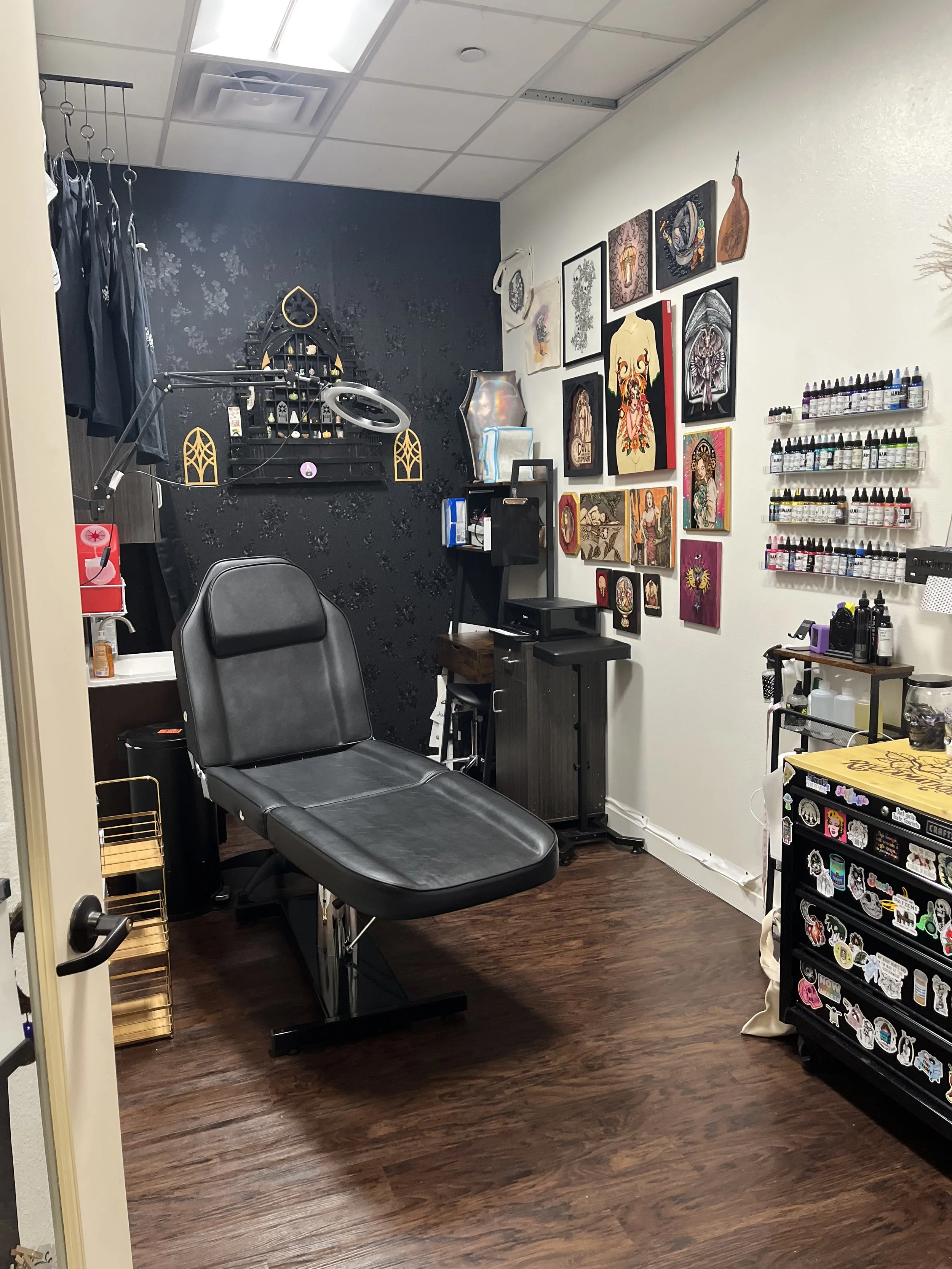
Tattoo shops are intimidating and not for people like you. That's a specific shop culture, not a universal truth. It's also one of the main reasons I built a private suite practice.
You have to know exactly what you want before reaching out. Absolutely not. Most people don't. That's what the consultation is for.
You'll be judged …. for your idea, your body, your age, your nerves. Not here. I've done a lot of first tattoos on adults in their 30s and 40s who held off for exactly this reason.
Tattoo artists are all gruff dudes who make you feel like your idea is beneath them. I am the direct antidote to this. Hi.
Tattoos are off-limits in professional settings. This one is more complicated than a blanket yes or no, and it deserves its own post. but the short version is: placement is a real consideration, workplace culture varies enormously, and a lot of professionals are tattooed in ways that are entirely invisible in a work context. It's worth thinking through, not ruling out.
Vibe Check
We're going to spend a real chunk of time together. The work I do is personal and the environment I've created is intentional. A vibe check matters on both sides, and if either of us gets a feeling early on that it's not the right fit, we don't proceed. No hard feelings, no pressure, no explanation owed.
This protects the experience for clients who do fit, and it keeps both of us out of a session that doesn't feel right. The clients who find their way to me through Instagram usually already have a sense of whether this is their place. If you're reading this and you're not sure, reach out anyway. Sometimes the fear of not belonging is the only thing standing between someone and the right artist.
How to communicate what you want…. even if you don't have the words yet
This is one of the things that keeps people from reaching out, and it doesn't have to.
A photo of the area you're thinking about goes a long way. Size, shape, existing scars or other tattoos nearby, skin type, texture… all of that informs the design before we've even talked. If you're covering something or working around something, I need to see it to design for it.
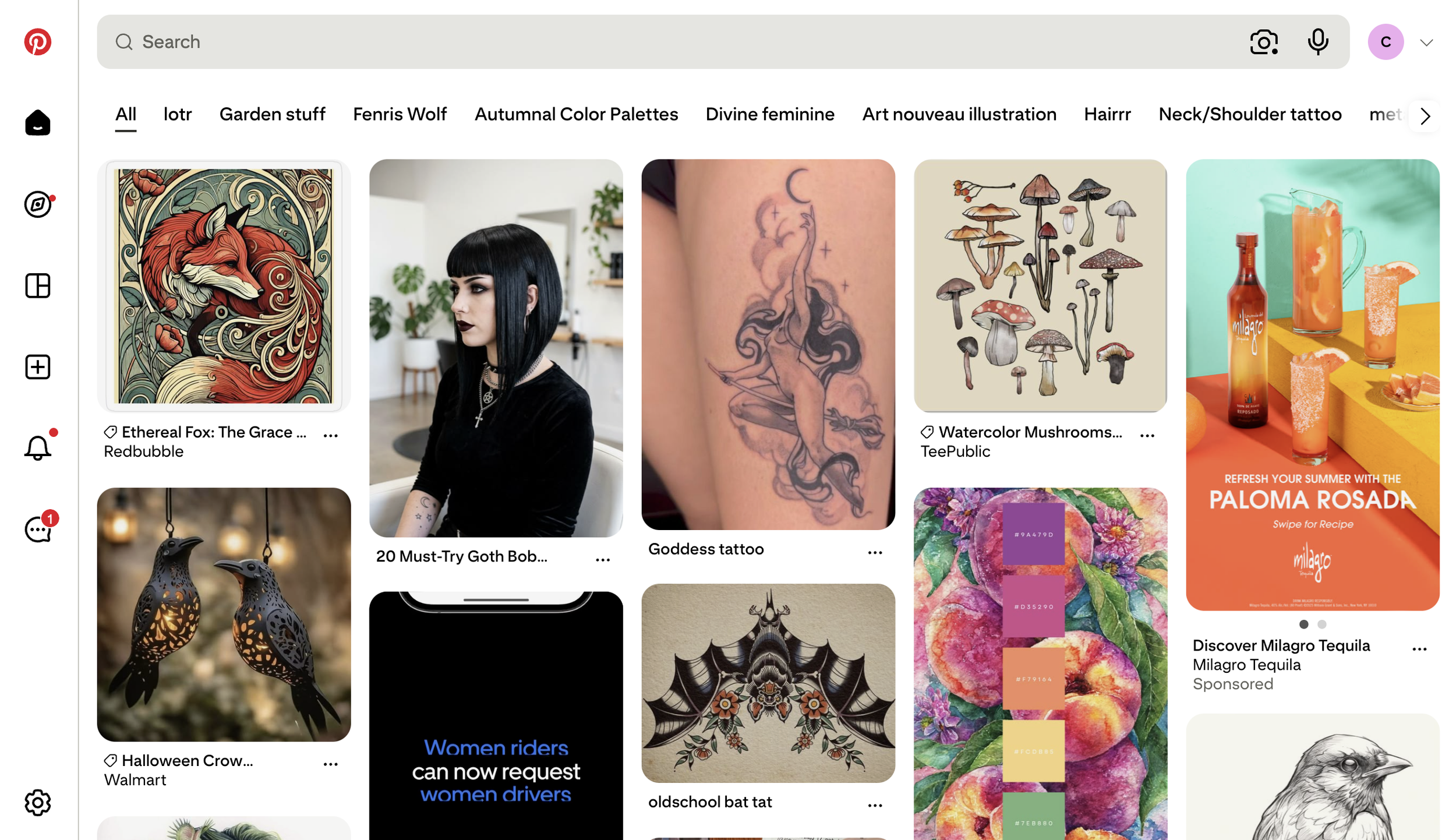
Pinterest boards are great. AI-generated concepts are fine for the general idea. I'll work out what's actually achievable and communicate clearly if something needs adjusting. Sketches on napkins, vague descriptions, a single reference image you've been saving for three years… all of it is a starting place. You don't need to arrive with a finished brief.
Tell me the general size, the vibe, any ideas you've had. The rest we figure out together.
Ask questions. I give detailed answers. I'll tell you everything I'm thinking about the design, address my concerns (flowers that will blur at a small scale, designs that will age in ways you might not expect) and make suggestions on placement based on the pain tolerance you have to work with. I advocate for you the whole way through, and I encourage you to advocate for yourself too.
Questions are welcome at every stage. That's not annoying. That's how this is supposed to work!
My consultation process, no surprises
How we connect first:
Some consultations happen entirely over email or text, and that works great. Written communication gives me something I can re-read and reference. I'm a visual thinker and I retain context much better when I can see it.
If you want to meet in person and get a feel for the space before committing to anything, we can absolutely arrange that. We'll set up a time to meet at the suite… I'm not stationed there between sessions, and the sessions themselves can be sensitive, so please don't just drop by. Reach out first and we'll find a time that works.
If you'd rather stay in your own comfortable environment, virtual consults are available too.
I don't do phone calls. I'm AuDHD, which means I lose too much without being able to see your face or re-read your words. Text or email will always serve both of us better, and honestly, most people prefer it anyway.
The actual consult:
I start by letting you talk. You've been sitting with this idea. I want to hear it before I say anything.
Then I'll ask questions and share any concerns: design elements that won't hold up at the scale you're imagining, placement ideas that might serve you better, things that could make the piece stronger. I'll tell you about my space and how it differs from a traditional open shop, including that I am never rushing you to get to my next client.
If it's relevant to you, I'll go as deep as you want on trauma-informed care: what narration and sensory attunement options you have during the session, what getting a tattoo actually feels like physically from start to finish, how we can plan ahead so you feel as prepared and comfortable as possible. There are no dumb questions in this part. People ask me things they've wondered for years and been too embarrassed to ask anywhere else. I genuinely love it.
How to take care of your body before you come in
The morning of every appointment, I send my clients a text. Here's what it says, and why it matters:

Eat a real breakfast and hydrate. Your body is about to do something a little intense. Low blood sugar can cause lightheadedness, nausea, and a harder time sitting through the session. Fuel yourself.
Please come clean. Shower and wash the area we'll be working on. Shaved or not shaved… either is genuinely fine, I'll handle it if needed. But please be clean. It's a hygiene thing and a skin prep thing.
Skip ibuprofen before your appointment. It thins the blood, which affects both the process and how the ink settles. If you need something beforehand, acetaminophen is fine.
No heavy drinking the night before, and please don't arrive intoxicated. Alcohol thins the blood and affects how your skin responds. Colorado cannabis is legal, and for some people it genuinely helps with nerves… that's between you and your body. Just know that health department regulations exist and I can't formally advise it.
Wear something that gives comfortable access to the area we're tattooing. A session interrupted by wrestling with clothing is a session that doesn't flow.
If you want topical numbing cream, plan to arrive 1 to 1.5 hours before your appointment time. I'll apply it for a $25 fee. If you want numbing gel during the session, that's available too. It takes about 10 minutes to work and is applied after the skin has been opened, so it's used once we're already underway. In-session gel is $15 per application.
Bring whatever helps you feel regulated. Snacks, headphones, a comfort item, your emotional support water bottle. This is your session.
Let's talk about pain honestly
You deserve the full picture, not a dismissal.
The sensation of getting a tattoo varies a lot depending on placement, your individual nervous system, how rested you are, and how your body is doing that day. Some people describe it as a hot scratch. Some find it meditative. Some find certain spots genuinely intense while others barely register. I'm not going to tell you it's nothing, and I'm not going to tell you it's unbearable.
What I will tell you is this: placement affects intensity significantly. Part of my job is giving you honest input on where something will be easier or harder on your body. If you have a design that could work in a few different spots, we'll talk through what that means for your experience and find the balance between the placement you love and the pain you can actually work with.
Your pain mitigation options:
Topical numbing cream before the session (arrive early, $25). Numbing gel during the session once we're underway ($15 per application). Breaks at any time, no explanation needed, no comments from me about toughness. Guided meditation or breathing… I'll find something on Spotify if you want it. Just say the word.
For some people, the sensation becomes part of the healing itself. It can be held as ritual, as release, as a marker of something survived. If that's the language that resonates for you… if this tattoo is also a spell, or a ceremony, or a closing of a door… we can hold it that way together.
When I say 3 hours, I mean 4 to 4.5… and that's on purpose
Session time includes paperwork, stenciling, confirming the design and placement together, checking in as we go, and making sure you feel good throughout. It's not just needle-to-skin time. I build in breathing room because precision matters more than speed.
We also take time at the start of the session to place and confirm the template together. I'm usually decent at good anatomy placement on the first stencil, but I'll move it as many times as you need until it feels exactly right. That collaborative step happens at the beginning of the session, before anything is permanent.
Some skin types take longer to saturate. Some designs are the same footprint but much denser in detail. That changes the time significantly. I'll tell you upfront what I expect and why.
Most people stay a while after we finish. Endorphins are real, the adrenaline settles slowly, and apparently I'm good company once you get past the needle part and the awkward part. There's no next client waiting at the door, no subtle signal that it's time to go. You leave when you're ready.
Aftercare is simpler than you think
Your tattoo will heal in stages, and it will look a little strange at some points in that process. That's normal. Full aftercare instructions are here and I'll go over everything with you before you leave. You can reach out after your appointment if something looks or feels off. I can’t give medical advice, as I’m not a medical doctor, but I can let you know what I do personally.
You don't have to earn your place in a tattoo chair.
If you've been waiting for permission to want this, here it is. You don't have to be a certain kind of person. You don't have to know exactly what you want. You don't have to be fearless, or young, or covered in ink already, or anything other than someone who's finally ready to take the step.
Questions are welcome before you book. Curiosity is welcome. "I'm not sure yet" is welcome. Even if you're just scouting it out, getting a general sense of the process, the cost, what it would feel like to finally do this… that's a completely valid reason to reach out. Any phase of the process is a good time to ask.
If something in this post made you feel like this might be your place, reach out. We'll figure out the rest together.
Reclamation Tattoo is a private, trauma-informed tattoo studio located in Phenix Salons suite 130 at SW Plaza Mall in Littleton, Colorado. Serving the greater Denver area including Lakewood, Englewood, Highlands Ranch, and beyond. 720-441-2928